PDF Ebook The Gunning of America: Business and the Making of American Gun Culture, by Pamela Haag
Those are some of the perks to take when obtaining this The Gunning Of America: Business And The Making Of American Gun Culture, By Pamela Haag by on the internet. Yet, just how is the means to obtain the soft file? It's very right for you to see this page due to the fact that you can obtain the link page to download and install guide The Gunning Of America: Business And The Making Of American Gun Culture, By Pamela Haag Simply click the link offered in this short article as well as goes downloading. It will certainly not take significantly time to obtain this e-book The Gunning Of America: Business And The Making Of American Gun Culture, By Pamela Haag, like when you have to go for book shop.
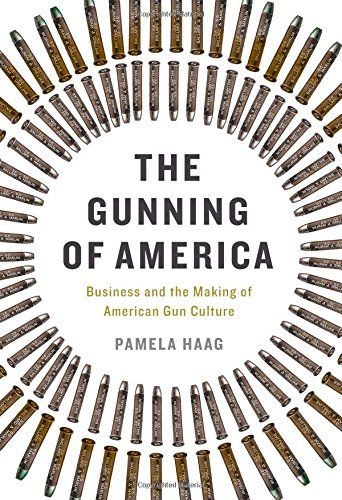
The Gunning of America: Business and the Making of American Gun Culture, by Pamela Haag

PDF Ebook The Gunning of America: Business and the Making of American Gun Culture, by Pamela Haag
The Gunning Of America: Business And The Making Of American Gun Culture, By Pamela Haag. Provide us 5 minutes as well as we will certainly show you the best book to review today. This is it, the The Gunning Of America: Business And The Making Of American Gun Culture, By Pamela Haag that will certainly be your finest option for much better reading book. Your 5 times will not spend thrown away by reading this web site. You could take guide as a resource making better principle. Referring guides The Gunning Of America: Business And The Making Of American Gun Culture, By Pamela Haag that can be situated with your demands is at some point difficult. However here, this is so simple. You can locate the most effective thing of book The Gunning Of America: Business And The Making Of American Gun Culture, By Pamela Haag that you can check out.
As one of the window to open up the new globe, this The Gunning Of America: Business And The Making Of American Gun Culture, By Pamela Haag offers its outstanding writing from the author. Released in one of the popular authors, this publication The Gunning Of America: Business And The Making Of American Gun Culture, By Pamela Haag turneds into one of the most wanted publications just recently. Actually, guide will certainly not matter if that The Gunning Of America: Business And The Making Of American Gun Culture, By Pamela Haag is a best seller or otherwise. Every book will certainly always offer best sources to obtain the user all finest.
However, some people will certainly seek for the best seller book to read as the initial recommendation. This is why; this The Gunning Of America: Business And The Making Of American Gun Culture, By Pamela Haag exists to fulfil your need. Some individuals like reading this publication The Gunning Of America: Business And The Making Of American Gun Culture, By Pamela Haag due to this preferred publication, however some love this as a result of favourite writer. Or, several additionally like reading this publication The Gunning Of America: Business And The Making Of American Gun Culture, By Pamela Haag since they really have to read this book. It can be the one that really like reading.
In getting this The Gunning Of America: Business And The Making Of American Gun Culture, By Pamela Haag, you could not still pass strolling or using your electric motors to the book stores. Get the queuing, under the rain or warm light, and also still search for the unknown publication to be because publication shop. By visiting this web page, you can only hunt for the The Gunning Of America: Business And The Making Of American Gun Culture, By Pamela Haag and also you can discover it. So now, this time around is for you to go with the download link and also purchase The Gunning Of America: Business And The Making Of American Gun Culture, By Pamela Haag as your very own soft file publication. You can read this book The Gunning Of America: Business And The Making Of American Gun Culture, By Pamela Haag in soft file just and also save it as yours. So, you do not have to fast place the book The Gunning Of America: Business And The Making Of American Gun Culture, By Pamela Haag into your bag almost everywhere.
Americans have always loved guns. This special bond was forged during the American Revolution and sanctified by the Second Amendment. It is because of this exceptional relationship that American civilians are more heavily armed than the citizens of any other nation.
Or so we’re told.
In The Gunning of America, historian Pamela Haag overturns this conventional wisdom. American gun culture, she argues, developed not because the gun was exceptional, but precisely because it was not: guns proliferated in America because throughout most of the nation’s history, they were perceived as an unexceptional commodity, no different than buttons or typewriters.
Focusing on the history of the Winchester Repeating Arms Company, one of the most iconic arms manufacturers in America, Haag challenges many basic assumptions of how and when America became a gun culture. Under the leadership of Oliver Winchester and his heirs, the company used aggressive, sometimes ingenious sales and marketing techniques to create new markets for their product. Guns have never “sold themselves”; rather, through advertising and innovative distribution campaigns, the gun industry did. Through the meticulous examination of gun industry archives, Haag challenges the myth of a primal bond between Americans and their firearms.
Over the course of its 150 year history, the Winchester Repeating Arms Company sold over 8 million guns. But Oliver Winchester—a shirtmaker in his previous career—had no apparent qualms about a life spent arming America. His daughter-in-law Sarah Winchester was a different story. Legend holds that Sarah was haunted by what she considered a vast blood fortune, and became convinced that the ghosts of rifle victims were haunting her. She channeled much of her inheritance, and her conflicted conscience, into a monstrous estate now known as the Winchester Mystery House, where she sought refuge from this ever-expanding army of phantoms.
In this provocative and deeply-researched work of narrative history, Haag fundamentally revises the history of arms in America, and in so doing explodes the clich�s that have created and sustained our lethal gun culture.
- Sales Rank: #34128 in Books
- Published on: 2016-04-19
- Original language: English
- Number of items: 1
- Dimensions: 9.25" h x 1.57" w x 6.13" l, .0 pounds
- Binding: Hardcover
- 528 pages
Review
Carlos Lozada, Washington Post
“[A] fascinating exploration of the major businesses and families that have manufactured firearms — and manufactured the seductiveness of firearms — in this country over the past 150 years... Democratic presidential candidates Hillary Clinton and Bernie Sanders sparred over [the repeal of the 2005 Protection of Lawful Commerce in Arms Act] in March...[They] could do no better than to read The Gunning of America to understand the history behind this argument and, as Haag puts it, to 'ponder the virtue, and the terror, of feeling more conscientiously or spiritually complicit than is required by contract, economy, law, or society.'”
New York Review of Books
“A revealing new account of the origins of America’s gun industry.”
Boston Globe
“In her remarkable new book, The Gunning of America, historian Pamela Haag undercuts much of the charged rhetoric about the importance of firearms in the nation’s culture and history with a richly sourced, empirical look at the 19th century origins of the gun business and the men who made it.... Against the popularized notion that guns were central to the making of America, Haag offers a powerful counter-narrative... One book will not settle the long-running gun debate, but Haag has powerfully reframed the issue as one rooted in dollars and sense, not the Second Amendment and inalienable rights.... Her historical sense...is brilliantly on display in these pages.”
New Republic
“In her masterful The Gunning of America, Pamela Haag furnishes a salutary corrective to the perception of the gun’s inevitability in American life by showing its history as a commodity invented and then deliberately marketed and distributed like any other widget or household appliance. Backed by vast research in the company archives of Winchester, Colt, and other manufacturers, her book is a mixture of analysis and close-focus biography of the many sturdy and sometimes strange early Americans who rode to wealth on the back of firearms.... [A] beautifully composed and meticulously researched volume.”
San Francisco Chronicle
“[An] inspired new book... Haag’s book is strongest when it upends the belief that America has had an uninterrupted love affair with guns.”
Times Literary Supplement (UK)
“Haag excels in decoding the succession of commercial promotions that helped to produce gun exceptionalism… [B]y tracing the evolution of advertising campaigns, she pinpoints how guns found their way into each corner of everyday life”
Maclean’s, (Canada)
“[A] detailed and devastating history... Haag deftly deconstructs the idea that guns have always been central to American identity.”
Adam Winkler, WashingtonPost.com
“Haag uses the remarkable story of the Winchester Repeating Arms Company to illustrate how American gun manufacturers remade America’s gun culture. In pursuit of sales, Winchester and other companies marketed their products as tools of empowerment. This effort, launched in the 19th century, transformed a mundane object into a potent symbol of American liberty and kick-started the modern gun rights movement.”
Carlos Lozada, Washington Post on Twitter
“This book makes the best case I've read on holding gun manufacturers responsible for gun violence.”
Publishers Weekly, Starred Review
“[A] fascinating account.... Both convincingly argued and eminently readable, Haag’s book will intrigue readers on all sides of the gun control debate.”
Bookforum
“Pamela Haag’s careful history aims to debunk the whole myth of gun exceptionalism in America... She reminds us that early American attitudes toward guns were far more prosaic than heroic...[and] that modern age gun-rights ideology stems from the nineteenth century’s 'market revolution'—i.e. the moment when cheap and reliable mass produced firearms first became available to a national buying public.... Haag’s account also challenges the notion that the manufacture of guns in the country has always had to keep pace with robust demand. She convincingly demonstrates that early twentieth-century gun makers set out to create a series of myths around guns and sell them to the public by reimagining them as an indispensable adjunct to American liberty... Haag also unearths another inventive breakthrough engineered by the early twentieth century’s mass-merchandisers of the gun: the discovery of a new type of consumer...dubbed the ‘gun crank.’”
Kirkus
“A refreshingly unusual approach.”
David W. Blight, Class of '54 Professor of American History at Yale, and author of Race and Reunion: The Civil War in American Memory
“The American gun industry taught the country to love guns. This fascinating and disturbing book is a riveting history of the men and families that made the guns that made America's gun culture. Pamela Haag shows conclusively that this country's tragic obsession with guns is not part of our political origins, or our constitutional and moral DNA; it is the result of marketing and industrial capitalism. Our gun culture was made, not found; it emerged less from creativity than from cold pursuits of profit. The fortunes made selling guns had nothing to do with the Second Amendment. Good history like this will not be read by the politicians and lobbyists who sustain the gun manufacturers today, but it should be.”
John Mack Faragher, Howard R. Lamar Professor of History, Yale University
“Pamela Haag has written a very smart book, deeply researched, original, provocative. The compelling narrative makes a powerful argument about the origins of America’s gun culture.”
Richard White, Margaret Byrne Professor of American History, Stanford University
“Pamela Haag has accomplished a rare feat. She combines wonderful storytelling with a serious analysis of the firearms business to reveal how the Winchester Repeating Arms Company taught Americans to love guns."
Richard Slotkin, author of Gunfighter Nation
“Most explanations of gun culture focus on the motives of the buyers, which range from the practical to the pathological. Pamela Haag's The Gunning of America is an original and insightful work of historical investigation, which shows how gun manufacturers created our so-called 'gun culture' through the systematic marketing of their product in an unregulated marketplace.”
Wes Moore, Founder and CEO of BridgeEdU
“The Gunning of America provides an exceptional, fresh perspective about the gun culture in America. Pamela Haag thoroughly examines the history of America's long term relationship with guns while offering an insightful, informative philosophy as to when and how this love affair began.”
Karl Jacoby, author of Shadows at Dawn: A Borderlands Massacre and the Violence of History.
“Firearms may be instruments of death. But they are also, as Pamela Haag reveals in her thought-provoking reassessment of guns in America life, economic commodities—so much so, that it can be difficult at times to discern where business culture ends and gun culture begins.”
About the Author
Pamela Haag holds a Ph.D. in history from Yale University. Her work on a diverse range of topics has appeared in many venues such as American Scholar, NPR, Slate, and the Times (London).
Most helpful customer reviews
22 of 25 people found the following review helpful.
Topically Interesting but Flawed Book
By Jim Drake
This intriguing analysis of the role of firearms in the history of American culture hinges upon the premise that the major American gun manufacturers (principally Winchester, Colt, and Remington) created the market for increasingly lethal firearms, just as other American manufacturers created markets for sewing machines, refrigerators, and other massed-produced consumer goods.
Quoting from factory correspondence, invoices, patent applications, and other documents from corporate archives, the author contends that firearms were initially "unexceptional commodities" of an emerging industry that came to be fueled by "federal government capital, patronage, [and] guaranteed markets"--especially warring European nations, which became anchor points in "the international arena" in which "the American gun business first survived."
Citing the iconic "One of One Thousand" Winchester 1973 lever-action rifle as an example of gun-industry fiction, the author quotes from a 1936 letter written to a customer by Winchester executive Edwin Pugsley, who scorned "the mystery and hokum" not only of the "One of One Thousand" rifle but of the gun industry itself. Underscoring the "unexceptional commodity" of firearms, Pugsley wrote that "a part of a billet of steel might be made into a gun part and another part of the same billet into a mowing machine, and the part which went into the gun barrel would have no more mythical properties than its brother in the mowing machine."
At its best, this new book sets aside the continuing debate over gun rights in America by focusing on gun manufacturers and their role in creating, promoting, and continually reshaping a mythology about the relationship between Americans and their firearms. Unfortunately, however, both the contents and the narrative structure of the book are marred by the author's over-reliance on anecdotal and third-hand sources, and by amateurish gaffes that she or her editor should have caught and corrected.
To cite one of the more embarrassing of these gaffes, the author spends several pages highlighting the role of Theodore Roosevelt in promoting the "manliness" of hunting and shooting, and of firearms overall. But rather than quoting directly from Roosevelt's numerous articles and books, the author instead refers to a T.R. biographer whom she identifies as "Desmond Morris." Considering that the biographer to whom she is referring, Edmund (not "Desmond") Morris, won a Pulitzer Prize for the first of his three internationally-known books on Roosevelt, any author or editor with normal eyesight and access to a search engine would have caught this blatant error.
Overall, with the exception of the factory data and correspondence which the author has researched and brought to light, this book is topically interesting and is a useful addition to the cultural history of an important American industry. The book is flawed, however, by a meandering narrative--especially the author's digression into the spiritualism of Sarah Winchester, and her conjecture that the bizarre California mansion built by the emotionally unstable widow of the Winchester founder was prompted by her guilt about the lives that were taken by Winchester rifles.
Both the Winchester mansion (popularly called the "Winchester Mystery House") and the life of Sarah Winchester have been the subjects of authoritative articles and biographies, most notably Mary Jo Ignoffo's 2010 book, "Captive of the Labyrinth: Sarah L. Winchester, Heiress to the Rifle Fortune." That too is well-documented, an attribute which is too often absent in "The Gunning of America."
69 of 88 people found the following review helpful.
Demythologizing American gun culture
By Englewood Review of Books
In this well-researched work, Haag demythologizes American gun culture. Arguments about guns, she observes, have for such a long time focused on questions of gun ownership and gun regulation, and often these debates have obscured the gun industry. In telling the story of the Winchester Corporation, Haag challenges us to consider the ways in which the gunmakers' drive for profit is fueling gun culture (and even gun violence) today. "One answer to the question, 'Why do Americans love guns?'," she writes, "is, simply, that we were invited to do so by those who made and sold them at the moment when their products had shed much of their more practical, utilitarian value" (xviii).
Haag is not anti-gun, but she challenges us to consider the history of how we have become so ardently pro-gun. This history, she maintains, illuminates new ways of addressing the problem of gun violence in our nation, ways that are more focused on accountability for the gun industry rather than on gun ownership.
Profit is a powerful force that will defend its own interests at an enormous cost. THE GUNNING OF AMERICA challenges us to consider the ways that profit has fueled our American desire for guns, and how regulation of the gun industry must be a vital part of the process of addressing the overwhelming gun violence of our day.
4 of 4 people found the following review helpful.
I enjoyed reading about the history of Winchester
By Pig Pickens
As one reader noted, it could have been edited down. I enjoyed reading about the history of Winchester, but there should have been illustrations of each gun the author mentioned. I am fairly neutral about gun ownership; I filtered out the "biased" parts, and enjoyed the history. And I'm not sure those who are knowledgeable about guns would describe a lever action rifle as a "semi automatic" gun.
The Gunning of America: Business and the Making of American Gun Culture, by Pamela Haag PDF
The Gunning of America: Business and the Making of American Gun Culture, by Pamela Haag EPub
The Gunning of America: Business and the Making of American Gun Culture, by Pamela Haag Doc
The Gunning of America: Business and the Making of American Gun Culture, by Pamela Haag iBooks
The Gunning of America: Business and the Making of American Gun Culture, by Pamela Haag rtf
The Gunning of America: Business and the Making of American Gun Culture, by Pamela Haag Mobipocket
The Gunning of America: Business and the Making of American Gun Culture, by Pamela Haag Kindle

Tidak ada komentar:
Posting Komentar